
Bullet the Bluesky
Out of the blue and into the black. They give you this, but you pay for that

Jamie Zawinski (jwz) is one of my favourite bloggers. He’s reliably spiky, which is important. He’s a legend in programming: employee number 20 at Netscape, responsible for the “Mozilla” name and for them open-sourcing their browser. But he quit that corporate world around the turn of the century and became responsible for the DNA Lounge nightclub in San Francisco, the trials and tribulations of which he continues to document online 25 years later.
Despite having a healthy share of Netscape equity to buy the business in the first place, Zawinski seems always to be up against it. There’s a succession of people behaving unreasonably and costing him money: drunk people breaking toilets and sueing, and an endless process of wrangling contractors and obtaining permits from the city. But somehow, he’s still trucking on (it’s DNA’s 40th birthday next week).
But the reason I mention it is because it reminds me of Bluesky.
I don’t have too much to add to my piece of almost exactly a year ago. I’m not on Bluesky, and don’t really feel any desire to be. Of course Twitter is still a mess (but it’s been a mess ever since I joined in 2012, and presumably before that) and I spend less time there than I used to. And I do miss some of the people who left for the blue place (though thanks to Bluesky’s RSS feeds I can keep up with their postings using feedly, along with various other blogs, and I see a lot of them on LinkedIn).

There’s been a lot of talk about the closed culture of Bluesky (see for example Damian Counsell’s recent article), which is important and I think backs up the concerns in my original piece. But there’s been less focus on the finances.
Back in jwz’s coding days, during the original dotcom boom, we got used to the idea of a burn rate. A plucky startup would set off with an idea, pull in money from venture capitalists, and invest it in staff and hardware while growing its income. The game was that, before the VC money ran out, they had to reach a stage where either the company turned a profit or one of the big fish (at the time Microsoft, now Google or Meta or others) would buy them out. At that stage, as Rory Cellan-Jones’ book dot.bomb describes, it was exponential growth or death. The world is littered with startups that got so far, but never quite clicked at that level.
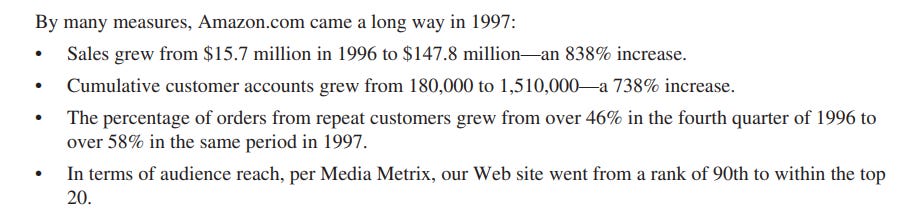
The problem is that making money on the Internet is hard. Even an eventual winner like Amazon took from its founding in 1994 until 2003 to have a single profitable year (see P27 of its 2003 financial report), despite stratospheric growth in sales and users in the intervening period:
But Amazon at least had a source of income. If it could sell enough books and shave its costs enough, the numbers would have to add up eventually. Whereas for Bluesky, the route to profitability is a lot less obvious. For that reason, I think it’s reasonable to ask about their finances and burn rate.
In October 2024, Bluesky sealed a Series A funding round for $15m from Blockchain (boo!) Capital. This followed an $8m funding round in July 2023. And in January 2025, on the back of steep user growth following the US election, they were talking about a further funding round with a valuation of $700m (note, not a $700m investment).
However, this latest funding round has not been announced, so we can assume that Bluesky are working their way through their $15m investment from October 2024. Of course, we don’t know how long that will take and how much money they have in the bank.
But around that time, the company had 20 employees and were hiring. We are told that they might now have 29 employees and 100 contractors moderating content. Given US salaries and benefits for tech employees, I don’t think it’s unreasonable to imagine that they might be paying $4-5m on core staff alone.
Add the cost of contractors, renting a corporate office in Seattle, physical infrastructure (servers that can handle sufficient traffic), and it’s reasonable to think that Bluesky might be burning through of the order of $5-7.5m per year, so that their latest $15m investment might be gone at some point in late 2026 or 2027.
Of course, I’m speculating here. I don’t have access to their accounts, but I find it hard to crunch the numbers in such a way that doesn’t imply that they’d need to be at least thinking about getting more money in.

And while it might have been possible to paint a picture of a $700m valuation in January 2025, via an exponential projection of the post-election surge in numbers, I strongly suspect that the stagnating user base takes that sum off the table now. But still, a further $15m maybe doesn’t seem unreasonable to keep the lights on for a couple more years at least?
However, I think there are challenges here, and many of them come back to the cultural issues with Bluesky’s userbase. Like I say, many of my best friends are on the site. But there’s also a hardcore minority who … don’t seem so pleasant.
Just as the vast majority of jwz’s patrons go to his nightclub to dance and have a good time, the vast majority of Bluesky posters do not want Jesse Singal to die painfully and horribly. However, just as the minority of people who behave badly can have a big enough effect to threaten Zawinski’s margins, that small group of Bluesky users can have a serious effect on possible routes to financial stability for the site.
I think in general there are two types of people: those who’ve spent hours of their lives staring at balance sheets and financial projections trying to find every possible efficiency and somehow chart a route to success, and those who wonder how hard it can be and why does it matter anyway?
The problem appears to be that Bluesky CEO Jay Graber is very much in the first category, and very many of her customers are in the second. Think jwz and his more difficult clientele. Or, if you want an older equivalent, read the emails between jwz and free software guru Richard Stallman about the split in the emacs codebase in 1992. There’s a fundamental clash between the adults in the room trying to Get Stuff Done, and Stallman trying to maintain some kind of impossible standard of free software purity.
If you want a more recent example: Linux is now one of the world’s most successful operating systems. But fundamentally that’s because Google bought Android and had the muscle and desire to make it the dominant mobile standard (70% market share), not because a consensus miraculously emerged from the squabbling nerds with their own hundreds of forking versions.
So, assuming that they do want to set it on a route to long-term success, what are Graber and Bluesky’s options?
Another funding round. This is probably Plan A. They’ve got 40 million registered users, they can shop their business plan around VCs and hope to get another tranche of money for the next few years. But even this comes with challenges. If I’m a VC, I’m going to ask questions: what are their growth plans? Investing in 2023 or 2024 when there was a plausible trajectory of exponential growth might have been a reasonable bet. But now the site has plateaued in users, where is further user growth going to come from? If I’m a grown-up investing in a site and associating my good name with that of the more excitable users, I’m likely to want a degree of moderation that some of the user base may not be comfortable with. And user growth is one thing, but VCs want a financial return eventually. How is this site ever actually going to turn a profit? So even if Bluesky is successful with option 1, then they will probably need to pursue the routes below to some extent as well.
Advertising. Again, this may not play well with the Bluesky base. Many of them were first attracted by the idea of a site that is advert-free, and some Have Views on capitalism and corporations in general. Further, there’s a fun game called Six Degrees of Genocide: if I’m a bank that is part of a larger corporate structure which includes an insurer who cover a company with a branch in Israel, I am now Complicit In Genocide. Am I going to want to advertise on a site whose more vociferous users will ram this down my throat at every moment? And how many potential big ticket advertisers wouldn’t fail this kind of purity test in one way or another? Maybe Bluesky can bring in $5-7.5m of advertising per year to keep the lights on, but that’s far from obvious to me given their number of active users - and even if they can, their costs are no longer $5-7.5m, because they need a whole new division to schmooze potential advertisers, sign deals, and soothe their hurt feelings if they get dog-piled.
Subscriptions. This one is easy!1 Bluesky has 40 million users! If each one just gave $10, then that’s $400m in the bank, and the company can live off the interest indefinitely. Except. This is somewhat in the territory of “if everyone just wore a N95 mask then the pandemic would be over next week”. Everyone won’t just do that - for a start there aren’t 40 million users: there are closer to 600k active posters per day. Even so, it might just about work: if each of those 600k people gave $5 per month then that’s $36 million per year. But there are two problems with this: first, Substack statistics reveal a big gulf between the number of people who use a service and those prepared to pay up front for it (if 10% of your Substack subscribers go paid, that’s reckoned to be a good return). Second, once you take this step, the dynamic of the site changes. I refer you to the Secret Footballer’s (sweary) Mark Viduka story, but for real. If Bluesky users pay a subscription, then they will gain expectations about the moderation and other features. For now, Graber can snark about poster strikes, but if the financial stability of her company depends on receiving subscription money from unbelievably hard-to-please people then it looks like a rocky future.
Something else. Change the site. Become the Everything App. Sell crypto. Find a white knight to invest a fraction of their fortune. Ok, and how’s that working out for Elon over at Twitter?
It has to be said, none of these options look great. My guess is that Bluesky will attempt to do some combination of 1, 2 and 3, and keep soldiering on for a while. But it’s far from automatic at this stage. There’s always a danger its user base will move on to the next new thing(s), and possibly fragment further in the process.
It almost makes running a nightclub seem like a quiet option.
A good piece. Based on a massive sample of one (me) I think Bluesky is doomed. I have never been on it and have found X much less toxic than many allege - and many of the left of centre people I follow are still active on it, so I am still getting a range of views. I have little interest in a platform which appears to be basically a left wing echo chamber - I can get that BTL on the Guardian site.
And for more considered and less tribal/simplistic views I have leapfrogged Bluesky and gone straight to this platform, and roamed more widely on LinkedIn (though personally I am queasy about the way LinkedIn is morphing into a less business-oriented platform, and attracting more posts which are basically Twitter-style virtue signalling)
So if I am typical of a huge number of unaligned centrists I can’t see where Bluesky gets its subscriber growth from.
I too am a fan of jwz. In case you haven't seen it there is a terrific interview with him in the excellent book "Coders at Work" by Peter Seibel: https://www.amazon.co.uk/Coders-Work-Reflections-Craft-Programming/dp/1430219483 which also contains a variety of interviews with luminaries such as Don Knuth and Ken Thompson. In the jwz interview the great man talks about his personal history and gives us his views on assorted topics including C++ ("just an abomination. Everything is wrong with it in every way") and overengineering ("At the end of the day, ship the fucking thing!").
I tend to agree about blooski, although I look in occasionally to hear what Prof Matthew Cobb has to say - he moved from twitter a while back. I loved his book "The Idea of the Brain", which taught me the useful word "neurobollocks", and am looking forward to reading his just released biography of Francis Crick. In NZ the intellectual landscape tends to be rigidly segmented, and the wokerati (the kind of people who think that playing whale song to trees is a promising treatment for kauri dieback - https://bioheritage.nz/research/oranga-wellbeing/) have all decamped to blooski where they tell each other how correct they all are and block anyone with even mildly dissenting views.